Dispersal represents the evolutionary process via which species respond to climate change, shift their distribution ranges and colonize new habitats. By migrating to unoccupied niches, tracking favorable climatic conditions and escaping extreme environmental stress, species sustain their long-term population persistence. As global warming accelerates, species' ability to disperse and establish viable populations in new habitats not only determines population survival, but also provides the scientific foundation for modelling range shifts and quantitatively assessing species extinction risks.
Nevertheless, the successful establishment of self-sustaining populations by dispersers is frequently constrained by niche mismatch in new habitats. Current theoretical frameworks lack sufficient molecular empirical evidence, hindering the dissection of intrinsic mechanisms through which niche mismatch restricts colonization success, and impairing accurate predictions of species distribution reshuffling under climate change.
Shaped strongly by topographic, hydrological and climatic gradients, riparian ecosystems serve as a feasible natural system to test niche filtering effects. Debregeasia orientalis C.J. Chen (Urticaceae), a characteristic riparian shrub mostly occurs to biodiversity hotspots in the mountainous regions of Southwest China, possesses multiple dispersal vectors including birds, wind and water flow. This species therefore acts as an ideal model to unravel the coupled mechanisms linking dispersal, niche filtering and genomic divergence (Figure 1).
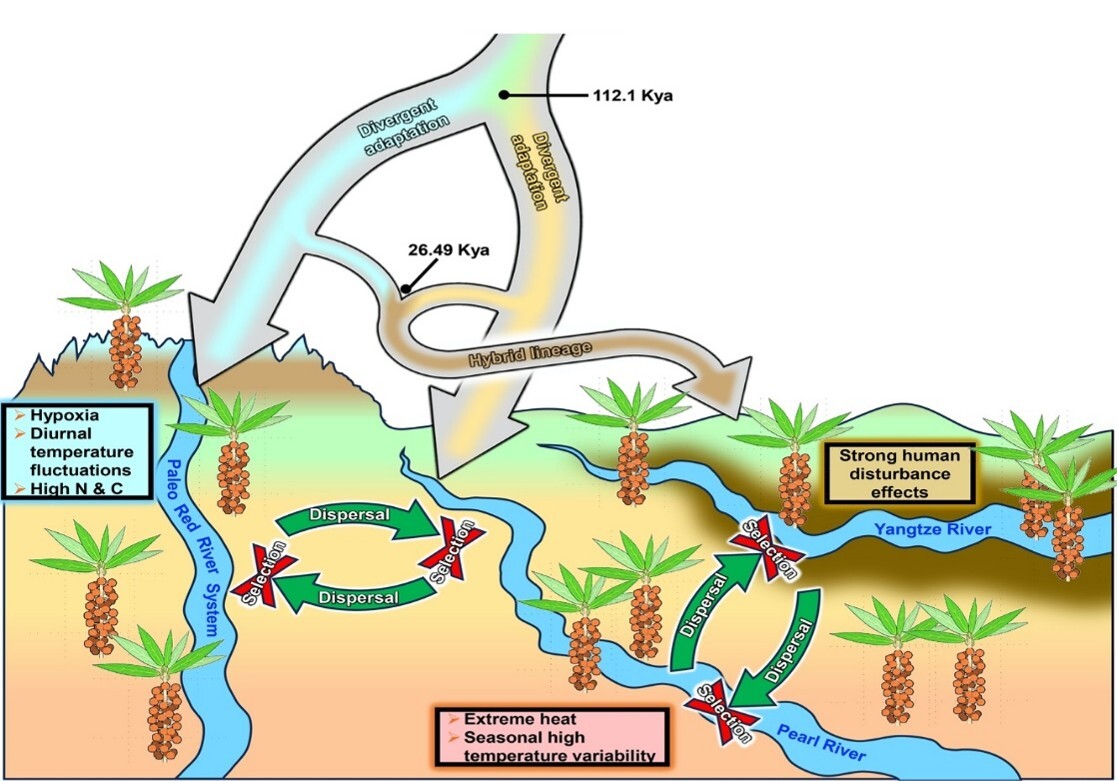
Figure 1.Morphology, habitat and geographical distribution of D. orientalis.(Image by KIB)
Recently, a research team led by Prof. LIU Jie from the Germplasm Bank of Wild Species, Kunming Institute of Botany, Chinese Academy of Sciences (KIB/CAS), Prof. LI De-Zhu from Shandong Agricultural University in collaboration with multiple domestic and international universities and research institutes, published an online research article titled Climate-driven niche filtering limits post-dispersal establishment and genomic introgression in a riverine shrub in the Journal of Integrative Plant Biology (JIPB).
Taking D. orientalis as a model system, this study integrates biogeography, macroecology and population genomics to systematically dissect how climate-mediated niche filtering constrains post-dispersal colonization, genomic differentiation and local adaptation, and evaluates lineage-specific vulnerability under future climate change scenarios.
Based on a chromosome-scale reference genome and whole-genome resequencing data of 332 individuals, population genomic analyses unambiguously identified three genetically distinct lineages within D. orientalis. Two lineages diverged during the early Last Glacial Period, while the third originated from more recent hybridization. Clear genetic isolation persists among lineages despite historical and ongoing gene flow.
Further ecological analyses revealed substantial niche differentiation across the three lineages. Genomic scans detected selective sweep signatures associated with hypoxia tolerance, thermal adaptation and responses to anthropogenic disturbance, confirming the genetic basis of local adaptation. Climate-driven niche filtering was identified as a major factor restricting lineage admixture and maintaining stable genetic structure.
Even with the species’ high dispersal capacity, cross-lineage gene exchange and colonization are strictly limited by niche constraints; niche matching directly determines post-dispersal colonization success, thus genomically validating the pivotal role of niche filtering. Genomic offset predictions further revealed asymmetric adaptive disadvantages among lineages under future climate change, with certain lineages facing substantially higher maladaptation risks (Figure 2).
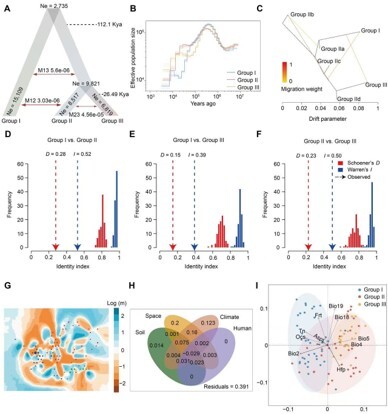
Figure 2. Demographical history, gene flow, niche differentiation and environmental divergence of D. orientalis(Image by KIB)
This study establishes an integrated analytical framework linking post-dispersal niche filtering and long-term genomic divergence. For riparian plants, it systematically demonstrates that climate-driven niche filtering constitutes a major factor maintaining genetic boundaries, shaping historical lineage divergence and shaping contemporary adaptive capacity (Figure 3).
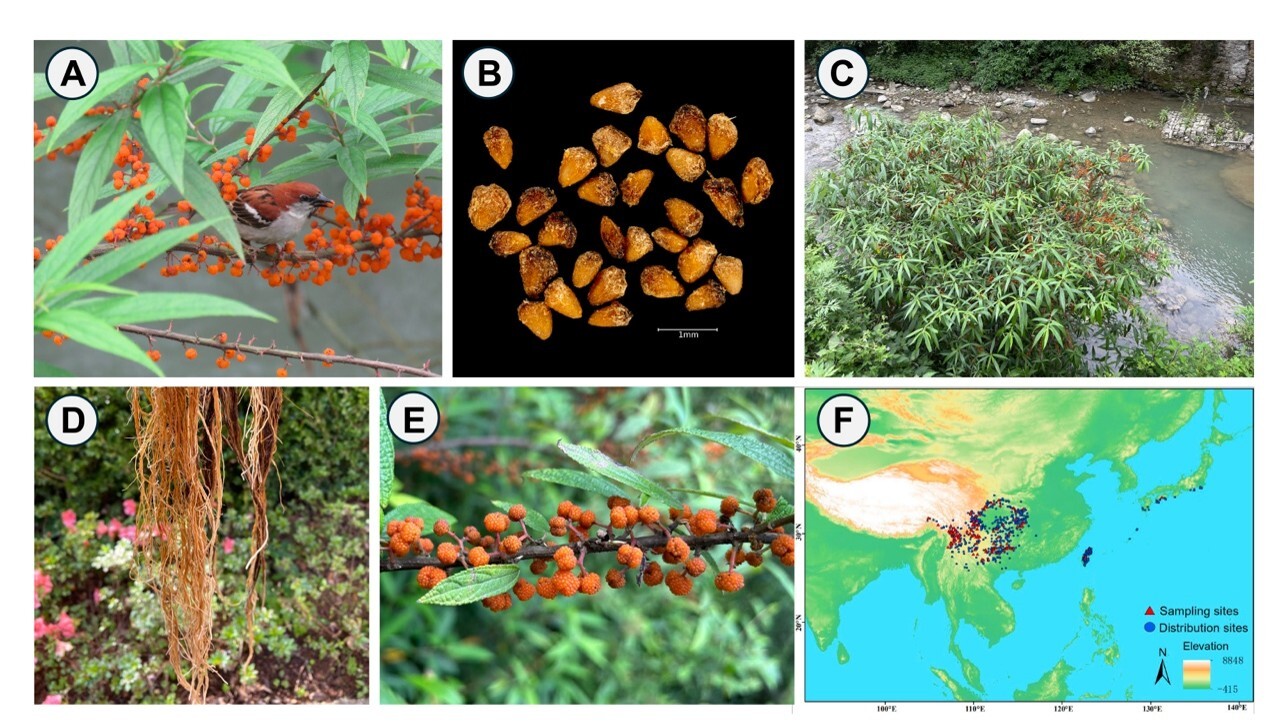
Figure 3. Schematic diagram of evolutionary history and adaptation in D.orientalis
(Image by KIB)
These findings advance our mechanistic understanding of species distribution dynamics and lineage differentiation. They also provide theoretical support for riparian ecosystem conservation and wild germplasm management under climate change, and deliver critical scientific evidence for designing lineage-specific conservation strategies for riparian biome.
This research was led by KIB/CAS in collaboration with Shandong Agricultural University, Xishuangbanna Tropical Botanical Garden (CAS), University of Toronto (Canada), University of Southampton, University of Edinburgh and Royal Botanic Gardens, Kew (UK). Prof. WU Zeng-Yuan from KIB/CAS is the first author; Profs. LIU Jie, Marc W. Cadotte and LI De-Zhu serve as co-corresponding authors.
This work was supported by the CAS ‘Light of West China’ Program (to Zeng-Yuan Wu), the Applied and Fundamental Research Foundation of Yunnan Province (202401AT070190), the National Natural Science Foundation of China (42171071, 32170398), and the Yunnan Young & Elite Talents Projects (YNWR-QNBJ-2020-293, YNWR-QNBJ-2018-146). Zeng-Yuan Wu and Jie Liu are supported by the China Scholarship Council (202304910135 and 202304910138) for one year of study at the University of Toronto, Canada. Prof. Richard Milne acknowledges support from the CAS President’s International Fellowship Initiative (2022VBA0004).
Contact:
YANG Mei
General Office
Kunming Institute of Botany, CAS
email: yangmei@mail.kib.ac.cn
(Editor: YANG Mei)